What's new
What has changed in Knotworking, newest first.
Xero, invoicing, CRM, routings and ten project templates
A broader catalogue for businesses that don't make food, three new modules, a connection to Xero and ten built-in project templates. This is pull request 3 in the public repository.
- Xero connection
- Owners and admins connect a workspace to Xero, confirm the organisation and its currency, verify the connection, reconnect when Xero asks for it and disconnect. Approved supplier bills post to Xero as bills, and issued customer invoices and credit notes post too once Invoicing is on. Each posting is read back from Xero. If a reply is lost, the document shows Needs checking and is never sent again by itself: you find it in Xero and verify it. Xero stays the ledger. It's tested against a simulated Xero, so try it on a Xero Demo Company first. The Accounting module is off until the server names it.
- Invoicing
- Draft customer invoices and credit notes from confirmed sales orders, despatches or signed-off client-service quotes, or by hand. Choose each line's tax rate, approve (optionally with a second approver) and issue a numbered PDF. It doesn't record payments, send reminders or email the invoice. Invoicing is off by default and needs Customers.
- Catalogue, Food items and Bills of materials
- Items now cover raw materials, components, consumables, spare parts, merchandise and services as well as ingredients and finished goods. Allergens, storage conditions and shelf life moved to the Food items module. Where a member can't use Food items, Recipes is called Bills of materials, so a workshop or wholesaler sees plain wording.
- CRM
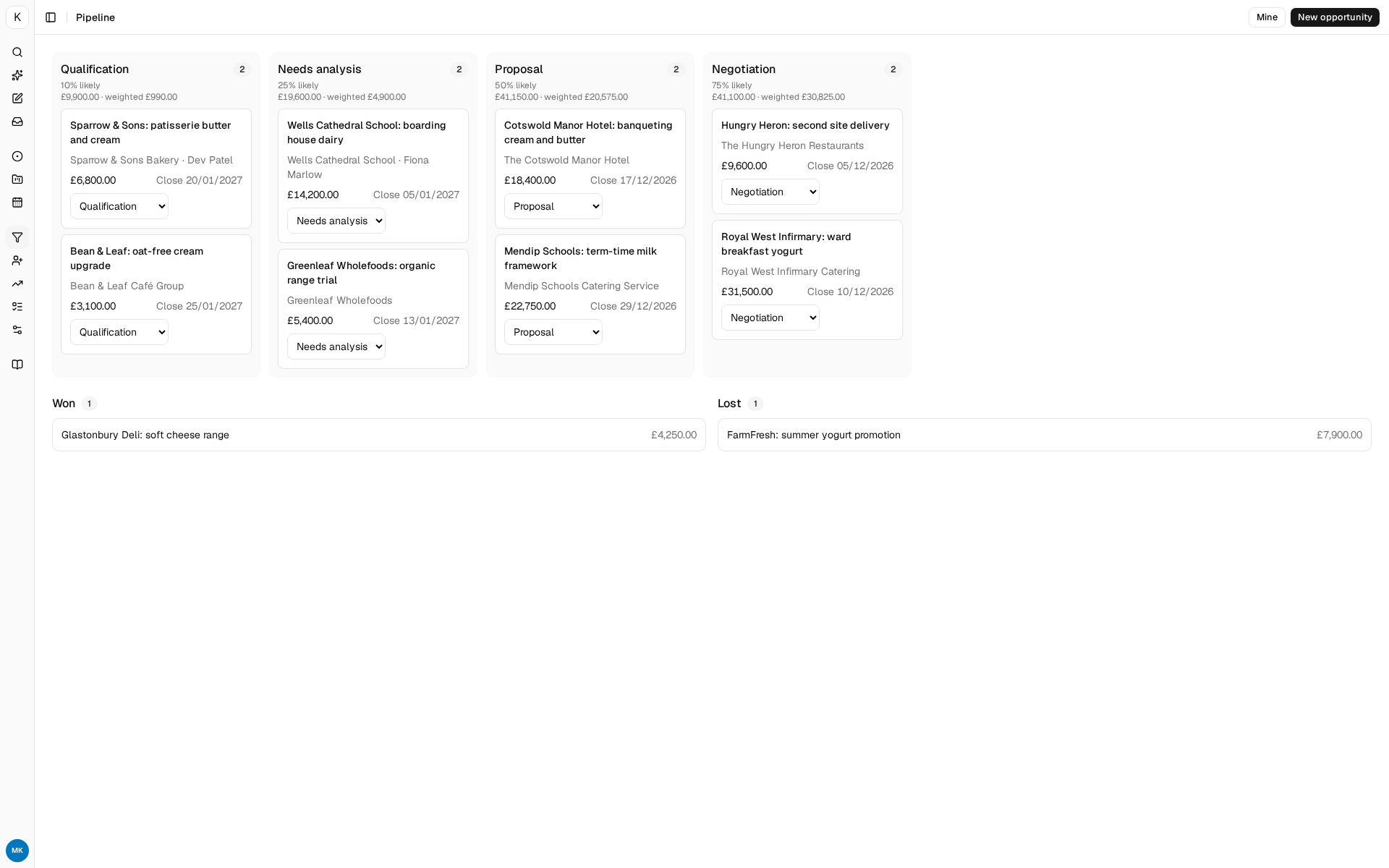
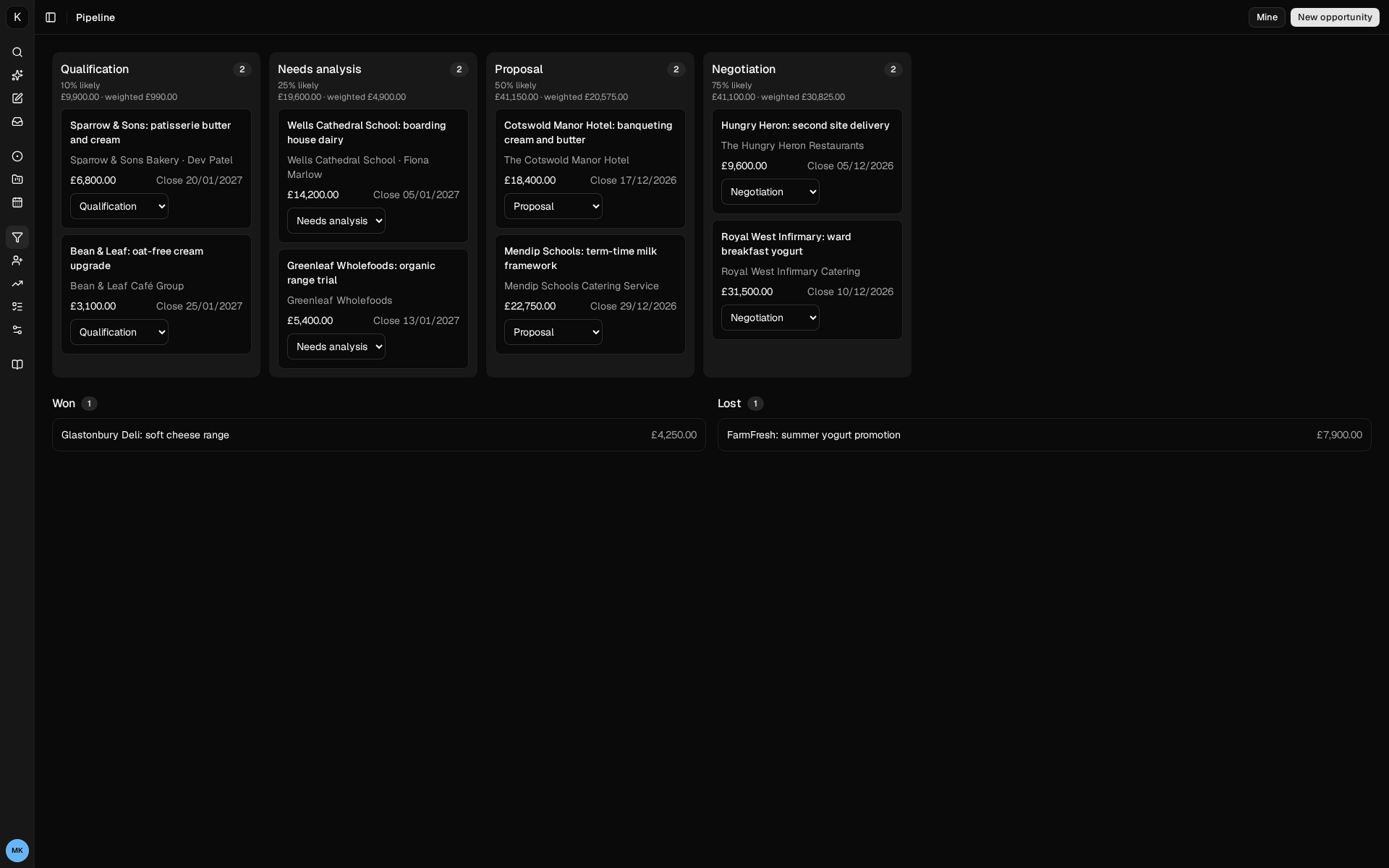
- Leads, opportunities on a pipeline with stages you can rename and reorder, owners and follow-ups. A qualified lead converts into a customer, and a won opportunity hands off through its linked quote to a draft sales order or a delivery project. It builds on Customers, and each member needs access granted.
- Routings and job cards
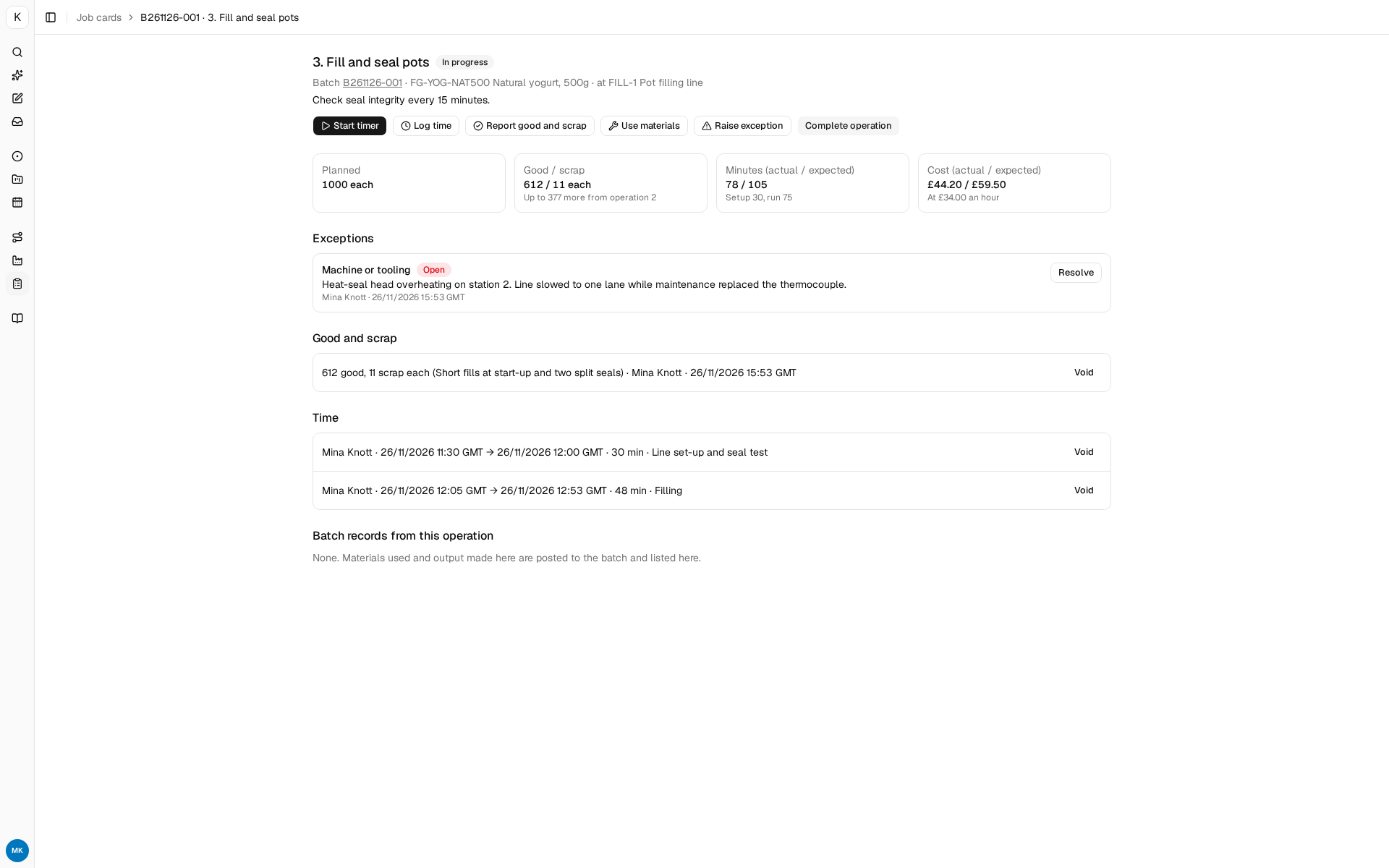
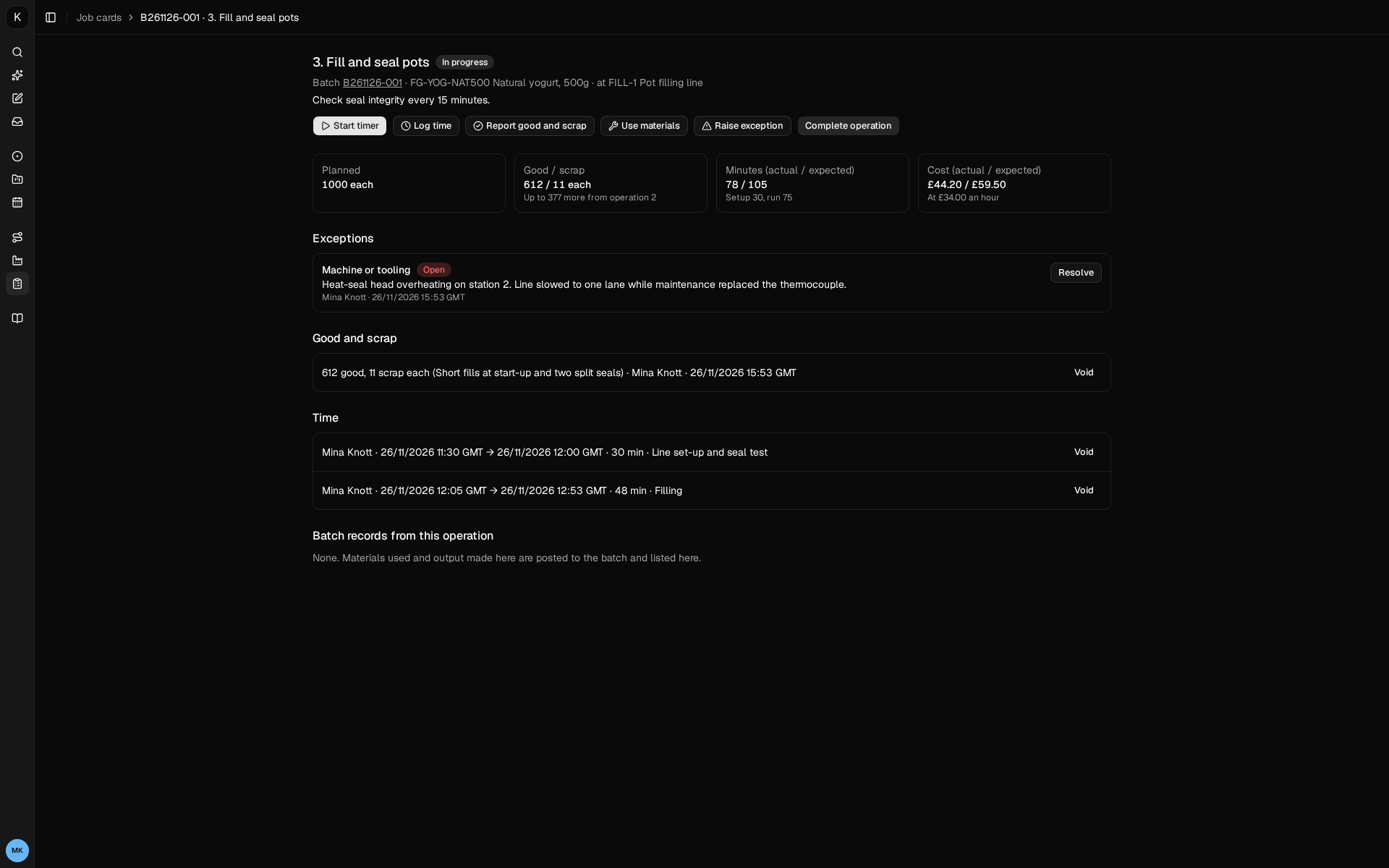
- Work centres with capacity and cost rates, versioned routings of ordered operations for each bill of materials, and job cards for each operation of a production batch. Record time, good and scrap quantities and exceptions. Production stays the ledger for materials and output, and work-centre time is added to the batch cost. It builds on Production, and each member needs access granted.
- Ten project templates
- Use template in Projects starts a project with dated tasks counted back from a milestone: Employee onboarding, Client kickoff, Client delivery, Site job, Equipment commissioning, Supplier onboarding, Store opening, New product build, Product launch and Kitchen opening. Edit the tasks before you create the project.
Still to do
What this release leaves open.
- Xero acceptance on a live organisation is pending. Until it's done, treat the connection as tested against a simulated Xero.
- Xero is the only accounting connection. Supplier credit notes and corrections to bills already posted aren't sent to Xero, so record those in Xero.
- Routings show work-centre capacity but don't schedule job cards against it. Parallel routings and subcontracted operations aren't built.
Up and running this afternoon.
Clone it, set a few values and start it with Docker. Caddy, the web app, the API and Postgres come up together on your own machine. There's no account with us and no per-seat bill.
git clone https://github.com/knotworking-oss/knotworking.git
cd knotworking && cp deploy/env.example deploy/.env
docker compose --env-file deploy/.env up -d --build
Set up Knotworking ERP using the instructions in this Markdown file.
https://knotworking.dev/docs/agent-install.md